

If you’ve been looking for a way to stay active without the challenge of getting down on the floor, chair yoga might be exactly what you need. This accessible yoga practice is gaining popularity across Mobile, Alabama, offering seniors, beginners, and anyone with joint concerns a practical path to better mobility and reduced stress.
Key Takeaways
Chair yoga is a gentle form of yoga practiced while seated or using a chair for support, which makes it a great option for seniors or those with limited mobility.
Regular practice can improve flexibility, balance, strength, and circulation while reducing chronic pain and stress—all without needing a yoga mat or getting on the floor.
Above & Beyond in Mobile, Alabama, offers weekly, small-group chair yoga sessions led by a certified instructor, designed especially for beginners and those seeking a gentler practice.
Most people can start with a simple 10–20 minute routine a few times per week and notice benefits like less stiffness and better posture within weeks.
Chair yoga is adaptable for arthritis, joint pain, and balance issues, though you should talk to your healthcare professional before starting if you have medical conditions.
What Is Chair Yoga?
Chair yoga is a style of yoga practice done while sitting in a sturdy chair or using the chair for support during standing poses. Instead of requiring a yoga mat and floor-based positions, all movements happen from a stable, seated base. This makes it ideal for anyone who finds traditional floor yoga uncomfortable or intimidating.
The yoga poses in chair yoga are modified versions of familiar movements like Mountain Pose, Cat-Cow, and gentle twists. Your joints stay supported throughout, and there’s no need to transition up and down from the ground. In this article, “chair yoga” mainly refers to poses done fully seated, with optional standing variations for those who feel steady on their feet.
Typical chair yoga sessions blend gentle stretching, light strengthening, controlled breathing exercises, and a short relaxation period. Sessions usually last 20–45 minutes, though even a few minutes of practice during a work break can help reduce tension. Breathe slowly and deeply, coordinating movements with breath during chair yoga—this connection between movement and breath is what makes the practice so effective for calming the nervous system.
Is Chair Yoga Right for You?
Chair yoga is especially helpful for people in Mobile who find traditional floor yoga too intense, intimidating, or hard on the knees and hips. It provides a stable, seated base that reduces the risk of falling, making it ideal for seniors and those with mobility issues. The benefits of chair yoga include pain relief, improved daily function, and stress reduction, especially for older adults and individuals with osteoarthritis. Chair yoga offers a safe, accessible, and effective way to maintain or improve physical and mental well-being without the need for a gym or high intensity.
You may benefit from chair yoga exercises if you:
Are you a senior looking to maintain flexibility and balance
Have arthritis or chronic pain in your joints
Are you recovering from illness or surgery (with your doctor’s approval)
Spend long hours sitting at a desk or driving on I-10
Experience balance issues or chronic stiffness
Feel nervous about losing balance in standing poses
No yoga experience, flexibility, or special clothing is required. Loose, comfortable clothes and a stable chair are enough to get started. Chair yoga can be practiced anywhere with a chair, making it perfect for office breaks to reduce tension. If you’re curious, try one short home routine or attend a beginner-friendly class at Above & Beyond to see how your body responds.
Benefits of Yoga in General
Yoga, including gentle forms like chair yoga, has been widely studied for both physical and mental health benefits. Research consistently shows improvements in flexibility, balance, strength, joint comfort, reduced stress, and better sleep among regular practitioners.
What makes yoga different from simple stretching is the connection between movement and breathing. This combination helps regulate the nervous system and lower everyday life stress levels. While many imagine fast, athletic “power yoga,” the same benefits can come from slower, simpler practices adapted for different bodies.
Chair yoga offers significant physical and mental benefits by improving flexibility, strength, balance, and circulation while reducing chronic pain and stress. It promotes relaxation, reduces stress, anxiety, and depression through controlled breathing and meditative movement. Think of yoga as a helpful complement to regular medical care and an active lifestyle—not a replacement for it.
Why Chair Yoga Is Especially Helpful
Compared to floor-based yoga, chair yoga places far less pressure on your knees, wrists, and hips. The chair provides a stable base that reduces fear of falling, allowing people with balance issues to move more confidently and relax into stretches. For individuals with limited mobility or balance concerns, chair yoga provides a stable and secure way to practice, reducing the fear of falling.
Practical benefits include:
Easier posture correction while sitting
Less stiffness after long periods in a car or at a desk
More energy for everyday tasks like walking, shopping, and housework
Improved strength and better balance for daily independence
In a study, older adults with osteoarthritis who practiced chair yoga for 45 minutes twice a week for eight weeks reported less pain and fatigue compared to those in a health education program. Chair yoga helps alleviate chronic pain, specifically in the hips and knees. Research indicates that chair yoga can lead to less pain and fatigue in older adults with conditions like knee osteoarthritis, enhancing their ability to perform daily tasks.
Chair yoga can improve mobility, functional fitness, and overall quality of life in older adults and those who struggle with limited mobility. Movements can be made smaller or larger depending on your comfort level, and extra support like cushions can be added as needed.

Simple Chair Yoga Routine You Can Try at Home
This short, beginner-friendly routine uses a stable, non-rolling chair and works well for most people cleared for gentle exercise by their doctor. Getting started with chair yoga requires very little equipment and can be done comfortably at home.
Before you begin:
Always listen to your body during chair yoga and avoid movements that cause pain
Stop any movement that causes sharp pain, dizziness, or shortness of breath
Move slowly, focusing on a comfortable range of motion
This sequence takes about 10–15 minutes, though each pose can be done on its own during work breaks. Try this routine 2–4 times per week at home, and consider joining an in-person class to refine your alignment.
Seated Mountain Pose
The Seated Mountain Pose involves sitting tall with both feet flat on the ground, keeping the spine straight, and relaxing the shoulders while breathing deeply.
Sit near the front of your chair with feet flat on the floor, knees over ankles
Rest your hands on your thighs with your shoulders relaxed and drawn gently back
Lengthen through the crown of your head
Take 3–5 slow breaths in and out through the nose
This pose resets your posture after slouching or screen time. Return to it between other chair yoga movements as your “home base.”
Gentle Neck Rolls
From Seated Mountain, this exercise can ease neck and shoulder tension from looking down at phones or computers.
Drop your chin toward your chest
Slowly roll your head to your right side, then back to center, then to your left side
Make 3–4 slow circles in each direction
Keep movements small if your neck is sensitive
Maintain calm, steady breathing and stop immediately if dizziness occurs. Avoid throwing your head all the way back.
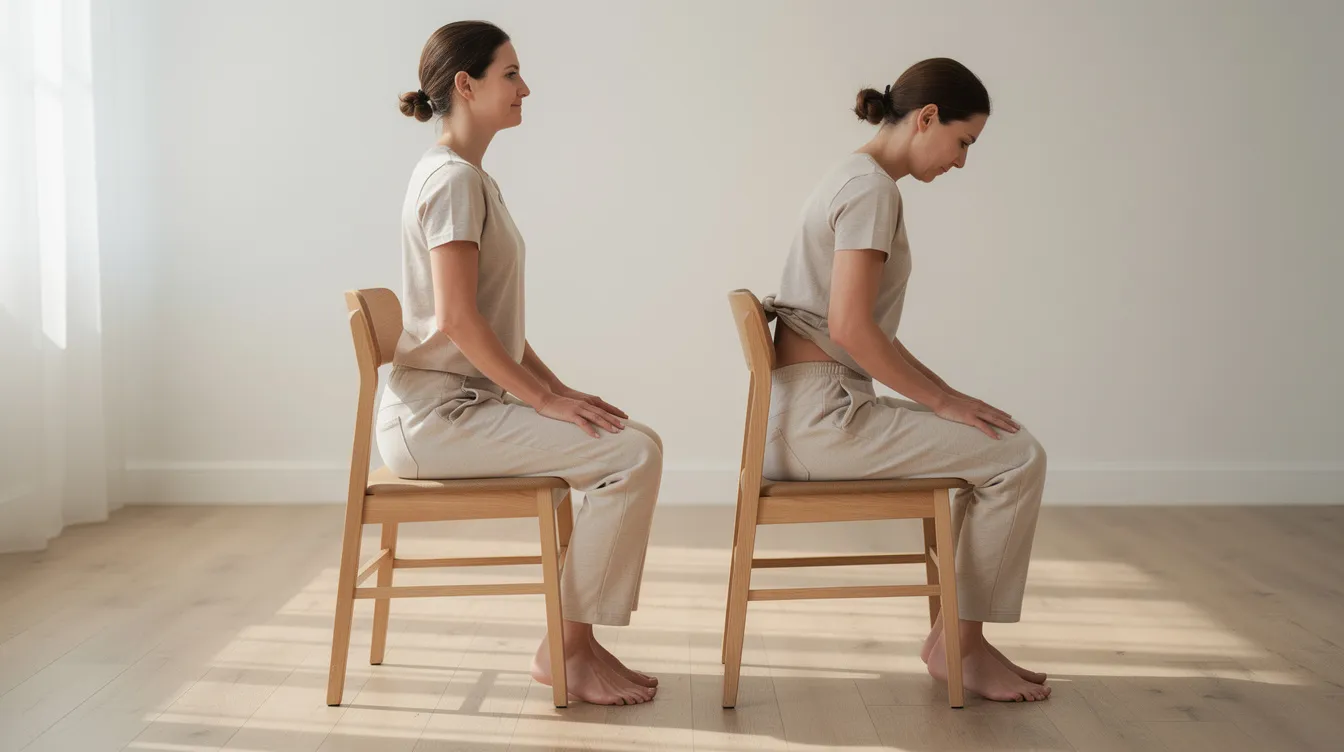
Seated Cat–Cow Stretch
The Seated Cat Cow Stretch alternates between arching the back and rounding it, promoting spinal flexibility and connecting movement with breath.
Sit tall with your hands on your knees or your right thigh and left thigh
Inhale to gently arch your back and lift your chest (cow position)
Exhale slowly to round your spine and draw your chin toward your chest (cat position)
Continue for 6–10 slow rounds, linking movement to breath
This stretch helps loosen a stiff back and encourages fuller breathing—especially helpful after long car rides.
Seated Forward Fold
The Seated Forward Bend requires hinging forward from the hips while keeping the back straight, providing a gentle stretch for the back and hamstrings.
Sit tall, then hinge forward from your hips
Slide your left hand and right hand down your legs toward your knees, shins, or ankles
Keep your back long rather than rounding deeply
Hold for 3–5 slow breaths, with the option to rest forearms on thighs
Rise back up one vertebra at a time rather than snapping to vertical—especially important for seniors or those with blood pressure concerns.
Seated Twist
The Seated Twist involves sitting upright, placing one hand on the back of the chair, and gently twisting the upper body to improve spinal mobility and aid digestion.
Sit tall, place your right hand on the outside of your left knee
Place your left hand on the side or back of the chair
Inhale to lengthen the spine, exhale to gently rotate your chest to the left side
Hold for a few breaths, keeping your left hip and hips facing forward
Return to the center and repeat with your left arm on your right leg
This spinal twist helps relieve stiffness in the mid-back. If you have spinal conditions, check with your healthcare professional before practicing deeper twists.
Seated Leg Lift and Ankle Circles
This simple move improves circulation and supports walking stability.
Hold onto the sides of your chair with your right hand and left hand
Extend your right leg with your right foot on the floor or right ankle slightly lifted, toes pointing upward
Lift your right leg only as high as comfortable, hold briefly
Make slow ankle circles in both directions
Switch to your left leg and left foot
Keep the heel on the ground if lifting feels too challenging. This exercise is especially useful for seniors in Mobile who spend time sitting indoors during hot weather.
Seated Side Stretch
This pose opens your rib cage and eases shoulder tightness.
Sit upright, place your right hand lightly on your chair or right thigh
Lift your left arm overhead, leaning gently to the right
Keep both hips grounded—don’t let your left hip lift
Hold for 3–5 breaths, feeling length along your waist
Return to the center and repeat, this time lifting your right arm overhead and leaning gently to the left
Keep your chest open and avoid twisting or collapsing forward. Feel comfortable in the stretch without forcing depth.
Simple Breathing Reset
This breathing exercise can calm the nervous system and serve as a quiet closing to any chair yoga session.
Sit with both feet on the floor, hands resting on your thighs or in your lap
Let your eyes close softly or look down
Inhale through your nose for a count of 4
Exhale slowly through your nose or mouth for a count of 6
Repeat for about one minute
Use this breath practice anytime you feel stressed—before appointments, after a long day, or before bed for well-being.
Safety Tips for Chair Yoga
Safety comes before depth of stretch. Your movements should never cause sharp pain, dizziness, or breathlessness. Chair yoga requires a sturdy chair without wheels on a non-slip surface while wearing comfortable clothing that allows for easy movement.
Essential safety guidelines:
Guideline | Details |
|---|---|
Chair selection | Sturdy, armless, non-swiveling, non-rolling |
Surface | Non-slip floor to prevent sliding |
Clothing | Loose or stretchy items allowing hip and shoulder movement |
Footwear | Flat, secure shoes or bare feet if balance is steady |
Starting pace | Begin with 5–10 minutes, increase gradually |
It is recommended to start chair yoga slowly, allowing your body to adjust to the movements and avoiding any strain or pain. When practicing chair yoga, ensure that your chair is safe and sturdy, without the risk of tipping, wobbling, or rolling. |
If you have heart conditions, recent surgeries, uncontrolled blood pressure, or severe joint pain, talk with your healthcare professional before starting. Practicing chair yoga regularly can help build strength, improve movement, and maintain overall physical activity, which is crucial for older adults to prevent falls and injuries.
Chair Yoga Classes at Above & Beyond in Mobile, Alabama
Above & Beyond is a local Mobile, Alabama studio offering supportive, small-group chair yoga sessions designed especially for seniors, yoga for beginners, and anyone who prefers a gentle way to move.
What to expect:
Bright, welcoming room with sturdy chairs arranged in a semi-circle
Calm music and a certified instructor providing step-by-step guidance
Options for different ability levels throughout each session
Sessions lasting 30–45 minutes, including warm-up, seated poses, breathing exercises, and short relaxation
Classes are held once a month, but are open to adding more classes if there is increased interest. Schedules can change, so call the studio or check their website for current times. Chair yoga has been shown to reduce stress levels in older adults, with participants experiencing greater stress reduction after regular practice compared to other activities.
Mobile residents are invited to try a first class—ask about introductory session options when you call. Contact Above & Beyond to reserve your spot, ask questions, or visit in person to see the space.
How Often to Practice and Building a Routine
Beginners should start slowly with 1–2 chair yoga sessions per week, 10–20 minutes at a time. Consistent chair yoga practice, even just 10–15 minutes a day, can significantly improve mobility and energy levels. Increase gradually as you notice improvements in comfort and reduced stress.
Practical times to practice:
Morning before your day begins
Mid-day break at work
Evening to unwind after dinner
Consider combining short home practices with one guided class at Above & Beyond each week. Group accountability and instructor feedback can help you improve posture and stay motivated for strength training benefits.
Building the habit:
Keep a simple calendar to track sessions
Invite a friend or spouse to join
Link practice to existing routines like morning coffee
Consistency matters more than intensity. Even 5 minutes of mindful movement in a chair brings more health benefits than none. Practicing chair yoga can significantly improve daily independence and better balance over time.
FAQ: Chair Yoga in Mobile, Alabama
Do I need any special equipment to start chair yoga?
Most people only need a stable, armless chair and comfortable clothing—no yoga mat or props are required for basic exercises. Optional extras like a small cushion or folded towel can add comfort under the hips or feet, but aren’t necessary to begin. Above & Beyond provides appropriate chairs and basic props for in-studio classes.
Is chair yoga enough exercise for seniors?
For many older adults, chair yoga can be an excellent foundation for staying active, maintaining improved strength, and preventing falls. Chair yoga can improve mobility and functional fitness, making everyday tasks easier and more confident. With your doctor’s approval, combine it with light walking for a well-rounded routine. Discuss individual goals like improving stamina or reducing fall risk with your healthcare provider.
Can I do chair yoga if I use a walker or have significant balance issues?
Absolutely. Chair yoga is designed with balance challenges in mind, and many poses can be done fully seated without standing at all. Inform the instructor before class so sequences can be adjusted. Consult your healthcare provider before starting and consider arriving early to discuss your comfort levels and limitations.
What should I wear and bring to a chair yoga class at Above & Beyond?
Wear loose or stretchy clothing that allows full movement—items like T-shirts and comfortable pants work well. Bring a bottle of water and any personal support items, like a small cushion. The studio supplies chairs and basic props, so there’s no need to bring a yoga mat unless you prefer one.
Can I try chair yoga at home first and then join a class?
Yes—starting with short home sessions is perfectly acceptable and can help build confidence before attending a group class. Use the simple sequence in this article as your starting point, moving slowly and feeling comfortable within a pain-free range of motion. Joining a class at Above & Beyond can then help fine-tune alignment, introduce new variations, including warrior II and seated pigeon poses, and provide the accountability of a regular schedule.